Solar Powered Lighting
Solar Energy Lighting The first step of the application of solar panels is lighting. As a result of the development of technology, increasing cell yields and decreasing of panel prices, solar lighting systems have become very popular in the world especially in the beginning of 1990s.
Sistemin genel prensibi gündüz güneş panellerinden elde edilen elektriğin akülerde depolanması ve gece ile birlikte enerjinin özel ampulleri çalıştırması prensibine dayanmaktadır.
Application areas of solar energy lighting systems:
• Park and garden lighting
• Street and street lighting
• Factory, workplace, shopping center, university garden and car parks
• Signaling, security systems
• Totem, advertising board, bus stop lightings
• Gas stations
• Emergency lighting
• Urban decorative lighting
Equipment used in solar powered lighting:
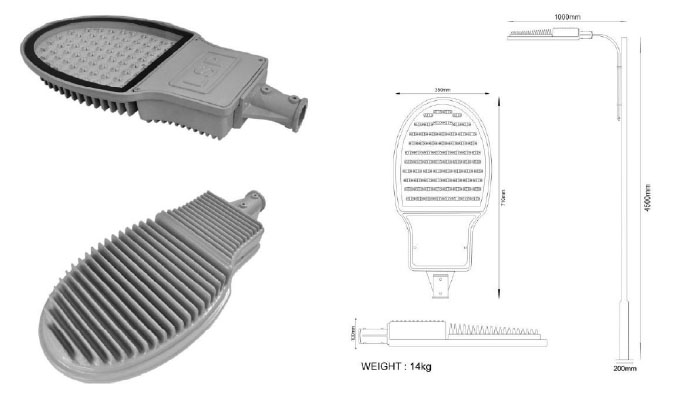
Armature: Especially light sources should be used. In this way, the amount of energy drawn by the lamp will decrease; this will reduce the cost of the solar panel and the battery and reduce the cost of the system. For example, instead of high-power sodium vapor lamps, the use of leds that have the same level of illumination but have half-power energy consumption will reduce the system cost by half. The most preferred light sources for such lighting applications are luminous fluorescent lamps, leds and SOX lamps.
Solar panel: The solar panel must be designed correctly because the system's generator is in the position. When the panel dimensioning is done, the values should be taken during the year when the day time is shortest (21 December) and the system should be simulated according to the solar heating values. Most of the time, the biggest errors in system design are made in panel selection. Incorrect selection of the panel size will cause the system to stop working in the short months.
Battery: The design of the battery is as important as at least the solar panel sizing. The most important issue in this design is the term autonomy. Even if the sun never comes out, the number of days that the lamp needs to be provided is called the autonomy time. Generally, the autonomy period is determined as 3 days except for the special applications. This means that even if the sun does not come out for 3 days, the energy we need will be supplied from the battery. In addition, it is undesirable for the battery to be fully discharged. Because in such a case the battery life is reduced. For this reason, besides the 3-day autonomy period, the battery pack should be selected approximately 30% more.
Inventors: The electricity produced from solar panels is DC. It is therefore suitable for battery charging. Batteries also store DC power and transmit as DC if needed. For this reason, DC electricity operated lamps are usually used for these systems. A DC / AC converter is needed in this case. However, because the inverters usually operate at a efficiency of 93-98%, there is some loss of electrical energy to the lamp. In order to prevent these losses, it is much more logical to install the system.
Custom Automation: Thanks to the special automation prepared for the charge regulator, the lighting level of the lamps can be reduced at certain times in order to save energy according to the charge state of the battery.
Charge Regulator: The charge controller is an electronic device that controls the current coming from the panel to the battery. Prevents the battery from being charged and discharged. In addition, by detecting the panel surface as a sensor, it allows the lighting to illuminate automatically in case of darkening and to turn off automatically when illuminated.
Construction: The construction to be placed at the top of the pole should be designed in the most appropriate way by considering the wind load, the weight of the panel and the weight of the battery, if any.
Advantages of solar energy lighting systems:
• Only initial investment cost
• Operating costs almost close to zero
• Less electrical losses
• Easy to assemble
• No dependence on external
• Producing AC / DC electricity according to need:• Energy per hour
• Daily working time
• Design for the worst sunbathing value in a year
• Autonomy time of the battery